A Lens Kit for UK Coastal Photography: What to Pack for Seascapes
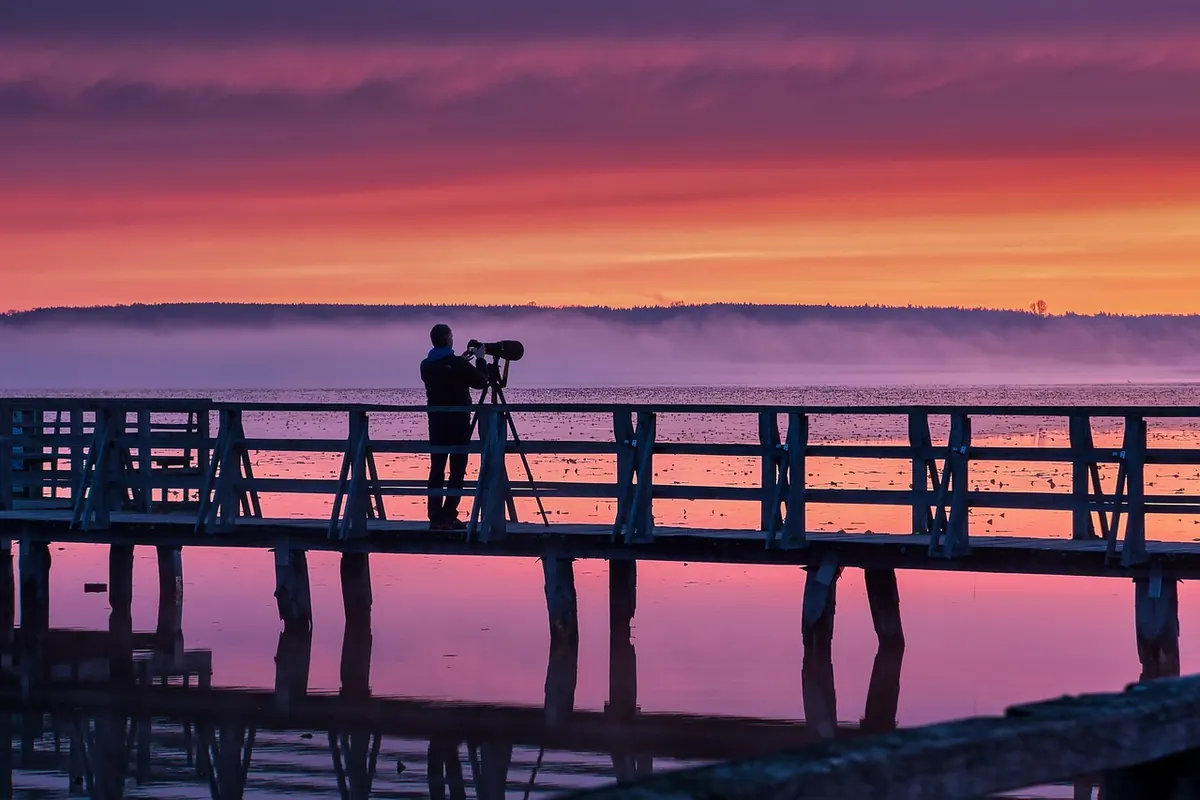
A British beach rarely hands you a tidy golden-hour postcard. You get a short window of workable light, a wind that pushes salt onto the front element, and a tide that decides how much foreground you are allowed. The lens kit you carry should be built around that reality rather than around a brochure shot from somewhere warmer. Three focal lengths cover almost everything: something wide, something long, and something that gets close.
Wide angles do the heavy lifting in seascape work. They let you put a wet rock, a curving line of foam or the ribs of a wrecked groyne inches from the lens while still holding the horizon. On full frame, 16–35mm covers most situations. On APS-C, a 10–24mm zoom or a 12mm prime gives a similar field of view. Micro Four Thirds users should look around 7–12mm.
The wider you go, the harder the composition gets. A 16mm frame swallows a lot of empty sky and flat sand, and the picture ends up describing the weather rather than a place. Find something to anchor the foreground — a line of bladderwrack, a rusted bolt, a puddle reflecting cloud — and get close enough that it fills a corner properly.
One buying consideration catches people out. Many ultra-wide zooms have a bulging front element that will not take a screw-in polariser or ND. If filters matter, choose a lens with a normal 72mm or 77mm thread, or budget for a square holder and its adapter ring.
Coastal photography is not only about the big view. A 70–200mm, or a 100–400mm if you are willing to carry the weight, does three jobs a wide lens cannot.
Wind is the enemy here. Long lenses act like sails, and a 300mm on a light tripod will shake in a stiff onshore breeze. Weight the tripod, hang your bag from the hook, and use a faster shutter speed than you would inland.
The coast is full of small things: limpets, beadlet anemones, seaweed, barnacles on a groyne, rust, sand patterns left by the receding tide. A macro lens turns a wait for the light into a productive hour.
A 90mm or 100mm macro is the better coastal choice if you can stretch to it, because it gives working distance. You are not casting a shadow over the subject and you are not leaning into the water. It also doubles as a sharp short telephoto, which means one less lens in the bag. On APS-C, a 60mm macro is lighter and covers similar ground.
You do not need a dedicated macro lens to start. Extension tubes fit between body and lens and cost far less, though they lose you light and autofocus speed. A two-element close-up dioptre, screwed on like a filter, is another inexpensive option and keeps autofocus. Whichever route you take, focus manually, work from a tripod or brace against a rock, and stop down to f/11 or so — depth of field at close range is measured in millimetres.
Three filters do most of the work.
Keep a clear or UV filter on the front of your most-used lens. It costs little, and wiping salt off a filter is much less painful than wiping it off a front element.
Sand is the more destructive of the two. It works its way into zoom barrels and focus rings and then grinds away at them for the rest of the lens's life. Salt is slower but no kinder: spray d
Photo: Nordseher / Pixabay
Previous Post
Autumn Photography: Choosing the Right Lens for UK Woodlands
Next Post
Review: Best Budget 50mm Lenses for UK Beginners