Five Common Mistakes When Shooting with a Wide-Angle Lens
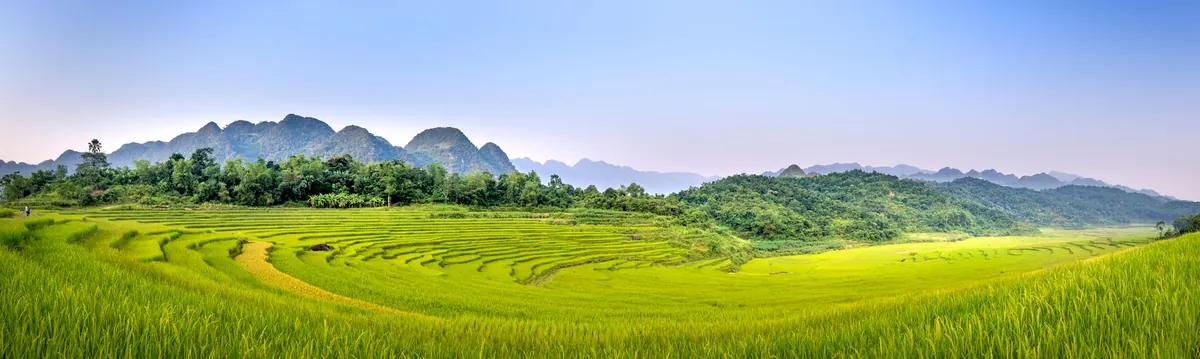
Wide-angle lenses promise a lot. More of the scene, more drama, more sky. Then you open the files at home and find a horizon sloping into the sea, a bottom third full of nothing in particular, and corners that have gone dark and soft. None of it is the lens's fault. An ultra-wide simply exaggerates whatever you do with it, good and bad, which is why these five habits are worth breaking early.
At 16mm, half a degree of tilt shows. Keep grid lines or the electronic level switched on and trust them; a horizon that looks fine on the back of the camera often doesn't at full size. If the sea is level in the frame but the pier is falling over, you've tilted the camera up or down instead, and the verticals have gone with it.
Sloping horizons can be straightened later, but you pay for it. Rotating a 6000-pixel file by two degrees pushes the corners out of the frame and forces a crop, so a lens you chose for its width ends up behaving like a narrower one. For buildings, keep the sensor parallel to the facade and step back if you can. If you must point upwards to fit the top in, accept that the verticals will converge and decide whether that's a deliberate part of the picture. Half-committed keystoning just looks like a mistake.
This is where wide-angle photography is won or lost. The lens pulls the near distance forward and pushes the middle distance away, so whatever sits closest to the camera becomes the anchor of the picture. If the bottom third of your frame is plain grass, empty pavement or a strip of grey road, you've spent your most valuable real estate on nothing.
Get close. Thirty to fifty centimetres from a rock, a fern, a painted kerb, a puddle that reflects the sky. Then look for something to lead the eye inwards: a path, a fence line, the edge of a wall, the line where wet sand meets dry. Kneel, or put the camera on the ground and look through the finder from there. A low angle makes the foreground bigger and the horizon smaller, which is usually the trade you want.
Depth of field is generous with wide lenses, but it isn't endless. At 16mm and f/11 focused a couple of metres away, most of the frame will be acceptably sharp, yet a flower forty centimetres from the front element may still be soft. Either focus on the foreground and let the distance go slightly soft — often fine, sometimes better — or take two frames and blend them. Check by zooming into the corners on the camera, not on the thumbnail.
Filters behave differently on an ultra-wide, and the problems turn up in the corners and the sky, where they're hardest to fix.
After fitting anything, take one test frame and zoom right into all four corners before you commit.
A wide lens shrinks the middle distance, so a scene that felt busy and layered to your eye can flatten into a thin band of detail between a large foreground and a large sky. More in the frame is not the same as more in the picture. Choose one subject and one line, then let everything else support them.
Do an edge patrol before every shot. Run your eye around the border of the frame and look for the half a person walking in, the bright bin bag, the branch poking in from the top right. These are cheap to fix in the field and tedious to fix later. Then check that the corners are at least doing no harm — a wide frame has four of them, and they carry more weight than you'd think.
A wide lens stretches anything near the frame edge. Put a face in the corner of a 20mm frame and it will look odd — wider, longer, less like the person. Keep people within the central band, arrange groups in a gentle arc rather than a straight line, and stand back rather than crowding in.
Straight lines bow outwards or inwards, and modern lenses correct a good deal of that automatically if you let them. Just remember the cost: correcting barrel distortion stretches pixels at the edges, and the corners get softer as a result. If a file needs heavy correction, it may be telling you the focal length was wrong for the shot.
Run that list for a few outings and it becomes automatic. Then take one familiar spot and shoot it at 16mm, 24mm and 35mm, standing in the same place. The differences in how the foreground grows and the background shrinks will teach you more about wide-angle composition than any amount of reading — and you'll start choosing the ultra-wide because the picture needs it, rather than because it happened to be on the camera.
Photo: Quang Nguyen Vinh / Pexels
Previous Post
How to Use a Macro Lens for Close-Up Nature Photography
Next Post
Autumn Photography: Choosing the Right Lens for UK Woodlands