Lens Mounts Explained: A Beginner's Guide to Fitting Lenses
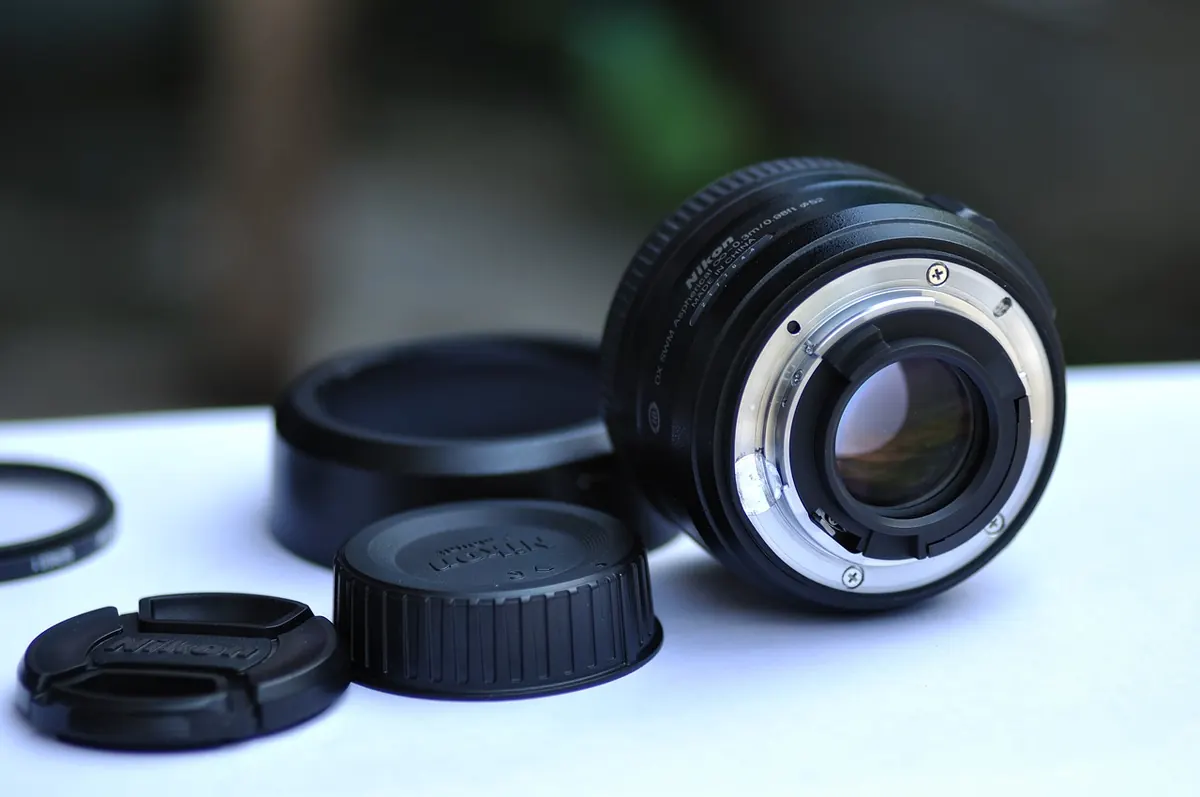
A lens mount is the handshake between camera and glass: a bayonet, a set of electrical contacts, and a very precise distance between the mount face and the sensor. Nothing in photography is more irritating than discovering the lens you have just bought will not sit on your body — and few things feel better than realising that an old prime in a drawer will.
Most of the confusion comes down to three things: the physical mount, the flange distance behind it, and whether the electronics can talk to each other. Get those straight and buying lenses stops being a gamble.
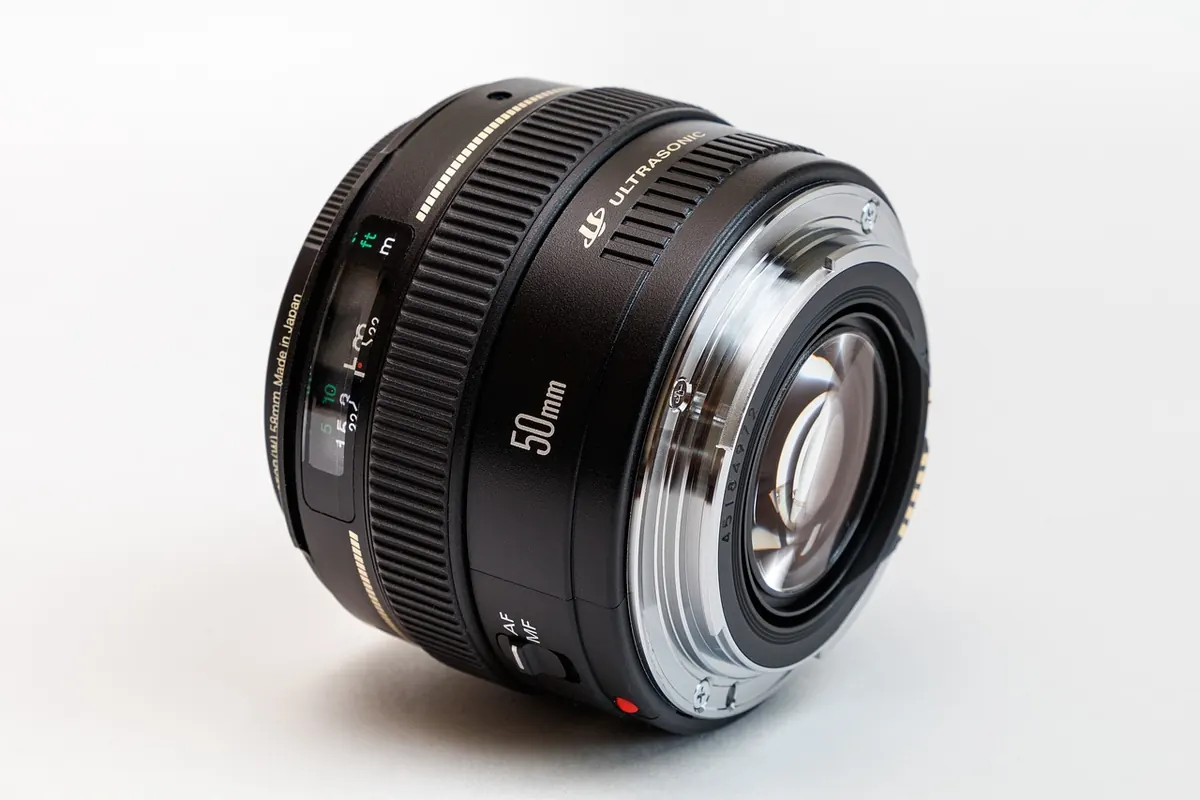
Physically, most mounts are bayonets. Three or four metal lugs on the lens drop into matching slots on the body, and a short twist locks them in place. Older systems used screw threads or breech-lock rings, which is why a 1970s M42 lens needs nothing more exotic than a threaded adapter.
The interesting part is what travels through the mount. On a modern mirrorless body, the contacts carry autofocus commands, aperture control, stabilisation data and EXIF information such as focal length. On a lens with a manual aperture ring, you are the electronics. That distinction shapes everything about adapters later on.
Digital SLRs inherited mounts designed around a mirror box, and the names are familiar: Canon EF and EF-S, Nikon F in its various forms, Pentax K, Sony A, Four Thirds. These mounts sit a long way from the sensor because the mirror needs room to swing up and down. That extra space is the reason you can adapt these lenses so easily onto newer bodies.
Mirrorless cameras removed the mirror, so the mount could sit much closer to the sensor. That gave designers more freedom with wide-angle and fast lenses, and it created the modern line-up:
Flange distance — sometimes called register distance — is measured from the face of the mount to the sensor. Nikon F is roughly 46.5mm, Canon EF about 44mm, Sony E around 18mm, Nikon Z around 16mm. Those few millimetres explain almost all adapter compatibility.
A longer flange distance can be adapted to a shorter one. The reverse only works if the adapter contains glass, and that glass costs you image quality.
So a Nikon F lens on a Nikon Z body needs an adapter around 30mm thick to make up the difference in spacing. A Sony E lens on a Canon RF body would need a negative-thickness adapter, which is why no such thing exists. Canon EF glass on Sony E, or Nikon F glass on Fujifilm X, works fine with the right tube in between.
Adapters fall into three broad types, and it pays to know which one you need before you order.
Screw-drive autofocus lenses rely on a motor inside the camera body. Nikon AF and AF-D lenses, and several older Minolta and Pentax designs, work this way. Very few adapters include such a motor, so those lenses become manual focus on mirrorless bodies. The lens will still take photographs; it just will not do the focusing for you.
Also worth knowing: some adapters with glass elements, sold cheaply for mounting one brand's DSLR lenses on another brand's DSLR, tend to soften images and reduce light. Treat them as a compromise, not a solution.
Crop-sensor lenses project a smaller image circle. Canon calls them EF-S or RF-S, Nikon DX, Sigma DC, Tamron Di II. They mount and work on crop bodies, but on a full-frame body you will get dark corners, heavy vignetting, or the camera will drop into crop mode and quietly throw away pixels.
Full-frame lenses on crop bodies are harmless. You simply use the middle of the image circle and lose some wide-angle coverage — a 24mm lens looks like roughly 36mm on APS-C.
Start with your own mount. Write it on a note in your phone, because it saves you from half-hearted guessing in a shop or an online listing. Canon RF, Nikon Z, Sony E, Fujifilm X, Micro Four Thirds — whatever it is, that is the target.
If you shoot one system and value convenience, buy native lenses. Autofocus is faster, weather sealing lines up properly, and you avoid the small wobbles and firmware quirks that come with third-party adapters.
If you are adapting, buy a good adapter once rather than three cheap ones. Test it at infinity focus on the day it arrives, and test the widest aperture you own. Return anything that wobbles or will not reach infinity.
And if you are weighing up a used bargain, ask two questions before handing over money: which mount is it, and does it have an aperture ring? Those answers tell you whether you are buying a lens or a project.
Photo: cuncon / Pixabay
Previous Post
70-200mm vs 100-400mm for Wildlife Photography: Which Lens Suits You?
Next Post
How to Use a Macro Lens for Close-Up Nature Photography